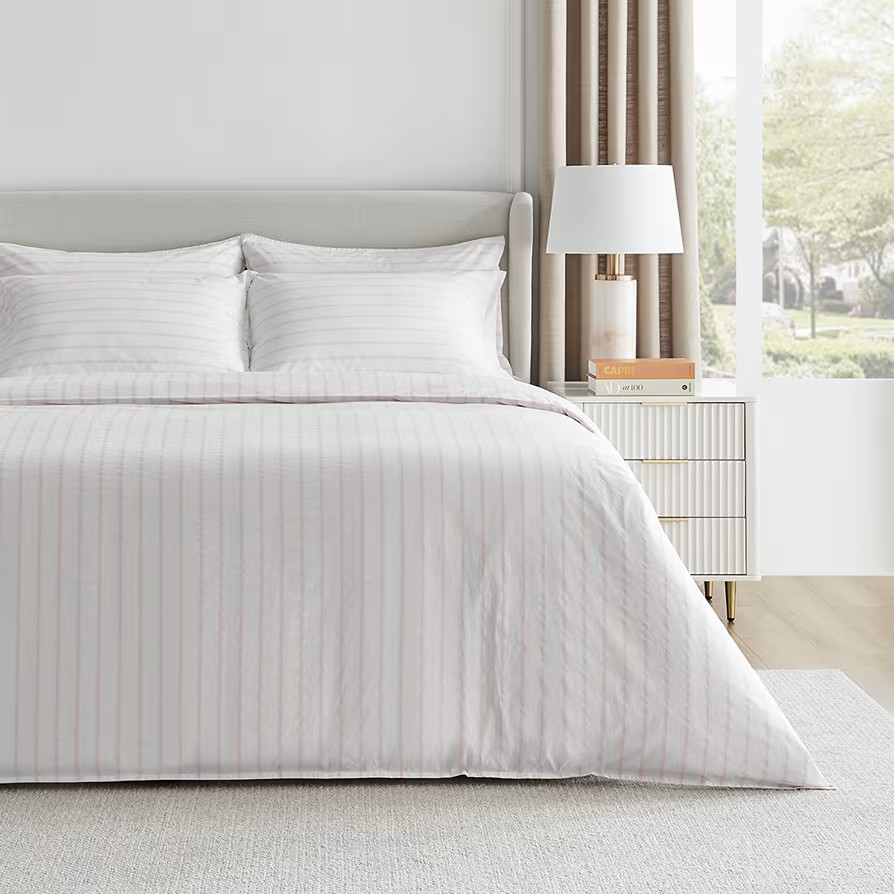
A hotel-inspired bedroom is less about copying a particular room and more about creating a sense of order, comfort and visual calm. The bed usually carries most of that effect because it is the largest surface in the space. DUSK sells bedding, towels and home textiles that fit naturally into this style, but a polished result depends on proportion and routine as much as on new products. A restrained palette, clean layers and easy-to-maintain materials can make the room feel considered without filling it with decorative objects that have no practical purpose.
Start with the bed as the visual anchor
The bed should be treated as the main composition. Duvet size, pillow arrangement and the drop of a bedspread or throw affect how generous the setup appears. DUSK offers neutral and hotel-influenced designs that can support a calm base, but the right scale is more important than adding many layers. Pillows should still be easy to remove at night and the bedding should fit the mattress without constant adjustment. A headboard can add structure behind soft textiles, while bedside tables with similar visual weight help frame the bed even when they are not a perfectly matched pair.
Layer texture instead of adding clutter
Texture creates depth when the colour palette is quiet. Crisp cotton, a quilted cover, a soft throw and a small amount of velvet or boucle can provide contrast without introducing busy patterns. DUSK can be combined with existing furniture by repeating one or two tones already present in flooring, curtains or upholstery. The room feels calmer when large surfaces remain related. Very bright whites can look different under warm evening lighting, while creams and natural shades can shift noticeably beside grey or beige walls. Fabric samples and existing pillowcases can help test those relationships before a full set is chosen.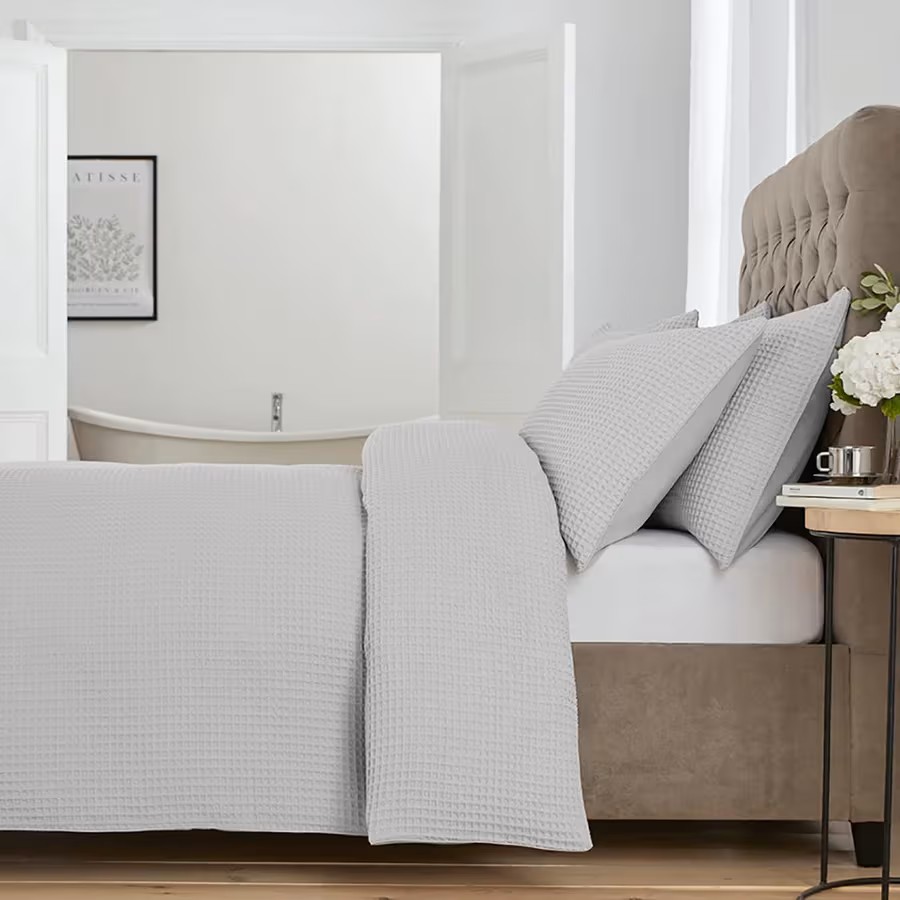
Choose bedding around care as well as feel
Bedding also needs to work with the household’s care routine. The most luxurious-looking set can become inconvenient if it demands maintenance that nobody wants to provide. Before buying, it helps to check
– fibre content and washing instructions for duvet covers, sheets and pillowcases
– whether spare sets can be stored close to the bedroom for easier changes
– how quickly different fabrics dry and whether ironing is realistically part of the routine
– whether decorative layers can be removed and cleaned without special handling
DUSK can supply the visual foundation, but easy care is what allows the room to stay consistently tidy rather than looking polished only after a major reset.
Use lighting to soften the final result
Lighting completes the effect. A strong ceiling light is useful for cleaning and dressing, but softer bedside sources create a more relaxed evening atmosphere. Lamps with warm output, shaded fittings and simple controls can reduce harsh contrast. DUSK textiles tend to look especially effective when layered light reveals texture rather than flattening it. Clutter control matters too. Charging cables, laundry and everyday toiletries can quickly interrupt the calm appearance, so small storage decisions are often as influential as bedding. A hotel-inspired bedroom succeeds when it feels easy to restore each morning. The design should support that habit, making comfort and order part of normal use rather than a special occasion.
Mattress and pillow comfort should not be hidden beneath styling decisions. Decorative layers can improve appearance, but sleep quality depends more directly on support, temperature and personal preference. Pillow height should suit the sleeper’s position and mattress firmness, while breathable layers can help regulate warmth. A bed that looks generous can still remain simple at night if decorative cushions are limited to a number that can be removed quickly. Storage for those items should be planned nearby. A bench, basket or clear shelf prevents cushions from ending up on the floor and makes the morning reset easier. Good bedroom design supports the sleep routine rather than forcing the routine to serve the photograph.
Window treatment also contributes to the hotel-like feeling. Curtains that reach the floor can add visual height, while blackout lining can support better darkness where street lighting is strong. The fabric should work with bedding rather than match it exactly. A room with several soft neutral surfaces often benefits from subtle tonal differences because they prevent the scheme from looking flat. Sound can be considered too. Rugs, upholstered furniture and curtains absorb some reflected noise, which can make a bedroom feel quieter even without major acoustic work. These choices create comfort through several senses at once. The calm result comes from consistency, not from expensive decoration, and it is easier to maintain when every layer has a clear role.
Temperature should remain part of the plan throughout the year. Bedding that feels cosy in cold weather may become uncomfortable in a warmer room, so lighter layers that can be removed independently are often more flexible than one very heavy combination. Seasonal storage should keep spare duvets and blankets clean, dry and easy to retrieve. A calm bedroom is easier to maintain when comfort can be adjusted without rebuilding the entire scheme.